500/7
Grade
Spheroidal graphite iron to ISO 1083:1987 — 500 N/mm² minimum tensile strength with 7% minimum elongation.
Reference
What the castings are made of, what they are made to, and how to pick the right load class for where the cover actually sits.
BS EN 124
The class is chosen from the installed location, not the chamber size. Where a cover sits within 500 mm of a carriageway, treat it as carriageway.
Areas that can only be used by pedestrians and pedal cyclists.
Suitable for car parks, footways and areas accessible to normal light vehicle traffic.
For kerbside channel areas of roads, extending up to 500 mm into the carriageway.
Suitable for hard shoulders, roads carrying heavy traffic, pedestrian areas and all types of road vehicle.
For areas of fast moving and especially heavy traffic, such as docks and aircraft pavements.
For areas involving particularly high wheel loads, such as aircraft pavements.
Metallurgy
Both are cast iron. The difference is the shape of the graphite — flakes that start cracks, or spheroids that stop them. That one difference drives strength, weight and how the cover behaves under an impact.
| Property | Grey cast iron | Ductile iron |
|---|---|---|
| Microstructure |
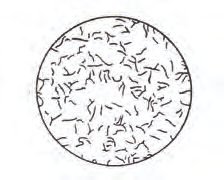 Graphite in the form of flakes, which act as stress raisers.
 |
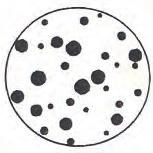 Graphite in the form of spheroids, which act as crack arrestors.
 |
| Impact resistance | Poor. Under severe impact it will break. | Strong. Under severe impact it will bend rather than shatter. |
| Tensile strength | 350 N/mm² min. — ISO 185:1985 Grade 350. | 500 N/mm² min. — ISO 1083:1987 Grade 500/7. Almost twice grey iron. |
| Elongation | Nil. No ductility. | 7% min. Moderate elongation and ductility. |
| Weight for a given duty | Higher, because of the lower strength. | Lower — at least one third lighter for the same load class. |
| Handling | Difficult, because of the higher weight. | Transport, handling, installation and inspection are all easier. |
| Vibration absorption | Poor. | High. |
500/7
Spheroidal graphite iron to ISO 1083:1987 — 500 N/mm² minimum tensile strength with 7% minimum elongation.
−⅓
For the same load class, a ductile iron cover is at least a third lighter than the grey iron equivalent — easier to lift, safer to inspect.
↯
Ductile iron bends. Grey iron breaks. On a carriageway that difference is the one that matters.
Specification
The range is manufactured to the following standards. Material certificates and load test reports are issued against each consignment.
EN 124 : 1994
Gully tops and manhole tops for vehicular and pedestrian areas
ISO 1083 : 1987
Spheroidal graphite cast iron — classification
ISO 185 : 1988
Grey cast iron — classification
BS 5834 Part 2 : 1983
Surface box frames and covers
BS 750 : 1984
Surface box frames and covers
EN 1433 : 2002
Drainage channels for vehicular and pedestrian areas
Third-party certified (Kitemark) versions are available on request for the references marked in the product schedules. Certification is issued by the certifying body against the foundry supplying that item — certificates are provided with the offer.